Why This Exists
The hype is real. One person can build what used to take a funded team. But between "anyone can build an app now" and actually shipping one, there is a canyon nobody talks about. This guide is the bridge.

Open any social media feed and you will see it. "I built this app in a weekend with AI." "No-code is dead — vibe coding is the future." "Solo founders are shipping faster than funded teams." Screenshots of working products, threads with thousands of likes, people who seem to have figured out something you have not.
Here is the thing: the hype is real. The tools that exist right now genuinely make it possible for one person to build what used to require a team of ten or twenty. That is not exaggeration. That is what happened to me.
But there is a massive gap between knowing this is possible and actually doing it. The people posting those screenshots do not show you the 47 failed attempts before the working one. They do not show you the three days spent debugging a payment webhook. They do not show you the App Store rejection at 11pm on a Friday. They do not show you staring at an error message that means nothing to you, wondering if you are in over your head.
This guide exists because I crossed that gap — not because I am some technical genius, but because I figured out a system that works. And I figured it out by getting it wrong first. Repeatedly.
The hype is real. The gap between the hype and actually shipping is also real. This guide closes the gap.
Who I Am (and Who I Am Not)
I am a former McKinsey consultant who moved to Mexico City and decided to build an AI company. Not an AI wrapper — a real product with 60+ AI conversation characters across five languages, a mobile app live in both app stores, payment processing, content production pipelines, and the kind of backend complexity that normally requires a dedicated engineering team.
I did it alone. And I need to be honest about why: not because I am particularly gifted technically. I am not a traditional engineer. I did not study computer science. Before this, the most technical thing I had built was a complicated spreadsheet.
I did it because the tools available right now make it possible — if you know how to use them. That "if" is the entire reason this guide exists.

The Problem With the Current Discourse
Everyone online seems to already know everything. They do not. Here is what is actually happening.
Scroll through any AI-building community and you will notice something: everyone seems impossibly advanced. They are deploying Kubernetes clusters, debating LLM architectures, posting terminal screenshots full of commands that look like a foreign language. It feels like you missed a prerequisite that everyone else completed.
Here is what is actually true: most of those people are either (a) experienced developers who already knew 80% of this before AI tools existed, or (b) people who are two weeks ahead of you and have learned to talk confidently about things they just Googled. Neither group is sharing the beginner-to-intermediate path because they either skipped it or forgot it.
The result is a gap in the information landscape. There is plenty of content for people who already know what a webhook is. There is plenty of content for people who want to drag-and-drop a landing page. There is almost nothing for the person in the middle — the person who has a real product idea, is willing to learn, but does not know what a "serverless function" is and should not have to pretend they do.
That middle person is who I was 10 months ago. This guide is what I wish existed when I started.
What This Is Not
"How to build your first website in 30 minutes." This is not a tutorial for toy projects. It is not about building a demo that looks impressive in a screenshot but falls apart the moment a real user touches it. It is not about no-code tools that cap out the moment you need something custom. And it is not about building someone else's product — it is about building yours.
What This Is
Everything I learned building a real product that real people pay for — from choosing a tech stack to deploying to the App Store, from database design to fundraising materials, from unit economics to what happens when Apple rejects your app at 11pm. No theory. All practice. Every chapter is a lesson I learned by getting it wrong first.
Every chapter uses a restaurant analogy. Building software is like opening a restaurant — you do not grow vegetables or build ovens. You assemble the right suppliers, equipment, and recipes. Your job is not to be a farmer or a blacksmith. Your job is to be a chef who knows what to order, how to combine it, and how to serve it. That is what this guide teaches. Not farming. Cooking.
The Operating System — Not the Product, the Process
17 chapters. Each one something I learned by doing it wrong first.
This document is not about my product. It is about the operating system I built to create it. The multi-chat AI workflow where different AI instances handle different jobs. The sandbox-first development philosophy that prevented me from breaking production on a Saturday night. The documentation system that compounds — 30 minutes of writing today saves 3 hours next week. The content pipeline that generates cinematic video from text prompts. The monitoring setup that wakes me up when payments break at 2am.
Every chapter is a system I built. Every system was built because I needed it — not because I read about it in a blog post. And every system was built after I tried the naive approach first and watched it fail.
Who This Is For
If you see yourself in any of these three, you are in the right place.
Technical Enough to Be Dangerous
You know some code — or you have been learning. You can read a tutorial but you cannot architect a production system. You want the AI workflow that multiplies what one person can build, but you need someone to explain the parts between the tutorials.
Non-Technical With a Real Idea
You have never written code. But you have taste, strong opinions about what should exist, and a product idea that will not leave you alone. You are tired of waiting for a technical co-founder. This guide starts from zero and does not assume you know what an API is. (Chapter 3 will teach you.)
Solo Operator, No Co-Founder Yet
Maybe you will raise money later. Maybe you will find a co-founder later. But right now, you want to get as far as possible alone so that when you do bring someone on, you are bringing them into a working product — not a pitch deck and a dream. This is the playbook for getting there.
What You Will Learn
17 chapters across four phases. Each one is standalone — read in order or jump to what you need.
Phase 1 — Strategy (Ch 1-6)
Ch 1: Why This Exists (you are here)
Ch 2: Picking Your Stack — the tools that do the work
Ch 3: APIs, Keys & GitHub — the three things every tutorial skips
Ch 4: AI as Your Engineering Team — multi-chat workflows
Ch 5: Vibe Coding 101 — directing AI like a film director
Ch 6: Documentation That Compounds — the highest-leverage habit
Phase 2 — Build (Ch 7-11)
Ch 7: Sandbox-First Development — never break production again
Ch 8: Edge Functions as Your Backend — the kitchen staff
Ch 9: Database Design for Solo Founders
Ch 10: Design Systems Without a Designer
Ch 11: Mobile App Architecture
Phase 3 — Ship (Ch 12-14)
Ch 12: Payments & App Store Compliance
Ch 13: Content Production at Scale
Ch 14: Automation & Monitoring — your ops team
Phase 4 — Grow (Ch 15-17)
Ch 15: Unit Economics & Pricing — the math that matters
Ch 16: Fundraising as a Solo Technical Founder
Ch 17: Lessons, Failures & What is Next
How to Read This
Each chapter has two layers. The core text is the philosophy — how I think about each problem, the mistakes that shaped those opinions, and the mental models that make everything else click. The appendices are the tactics — exact configurations, code patterns, step-by-step workflows you can copy.
Read the chapters for thinking. Reference the appendices when building. You do not need to memorize anything — you need to know where to find it.
If you are brand new: read chapters 1-6 in order. They build on each other. After that, jump to whatever you need next. If you are mid-build and stuck on payments, go straight to Chapter 12. If your app just got rejected by Apple, Chapter 11 has what you need.
Core Chapters
Philosophy, opinions, real mistakes. Read for the thinking and mental models.
Appendices
Configs, code, step-by-step workflows. Reference when building.
Restaurant Analogies
Every technical concept explained in plain English through restaurant operations.
The Honest Truth About Building Alone
Building a product alone with AI is not easy. It is dramatically easier than building alone without AI — but it is still hard. There are days where nothing works. Days where a bug you cannot understand blocks you for eight hours. Days where you question whether any of this is worth it.
This guide does not pretend those days do not exist. What it does is reduce them. A good documentation system means you waste fewer hours re-explaining context. A sandbox-first workflow means you break production less often. A monitoring setup means you catch problems before users do. Good AI prompting means the code you get back is closer to correct the first time.
None of these eliminate the hard days. They just make the hard days fewer, shorter, and less catastrophic. And they make the good days — the days where you ship a feature that works, where a user thanks you, where you see a payment notification from someone you have never met — those days happen more often.
That is what this guide is for. Not to make it easy. To make it possible.
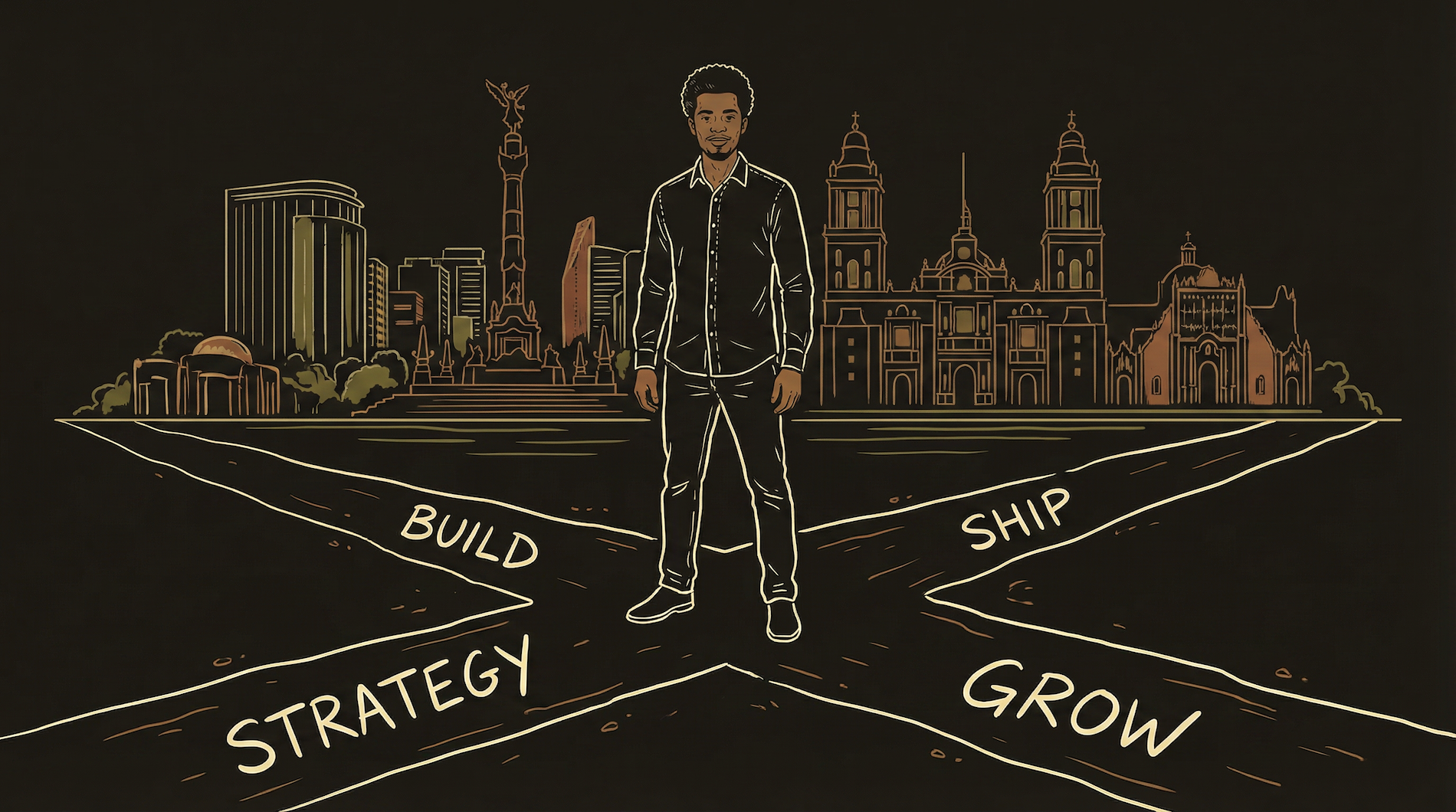
The tools exist right now for one person to build what used to take a funded team of twenty. This is the operating system — not the product, the process. Let's go.